
Sailing Sithonia is one of the finest experiences in Halkidiki. Sithonia faces two different bodies of water. To the west, the Toronaios Gulf – calmer, more sheltered, with a string of harbours and coves that run from Nikiti in the north down to the dramatic headland of Porto Koufo at the southern tip. To the east, a wilder, more exposed coastline that faces open water and hides some of the most extraordinary beaches in Greece. The two sides have completely different characters, and together they make Sithonia one of the most varied sailing destinations in the northern Aegean.
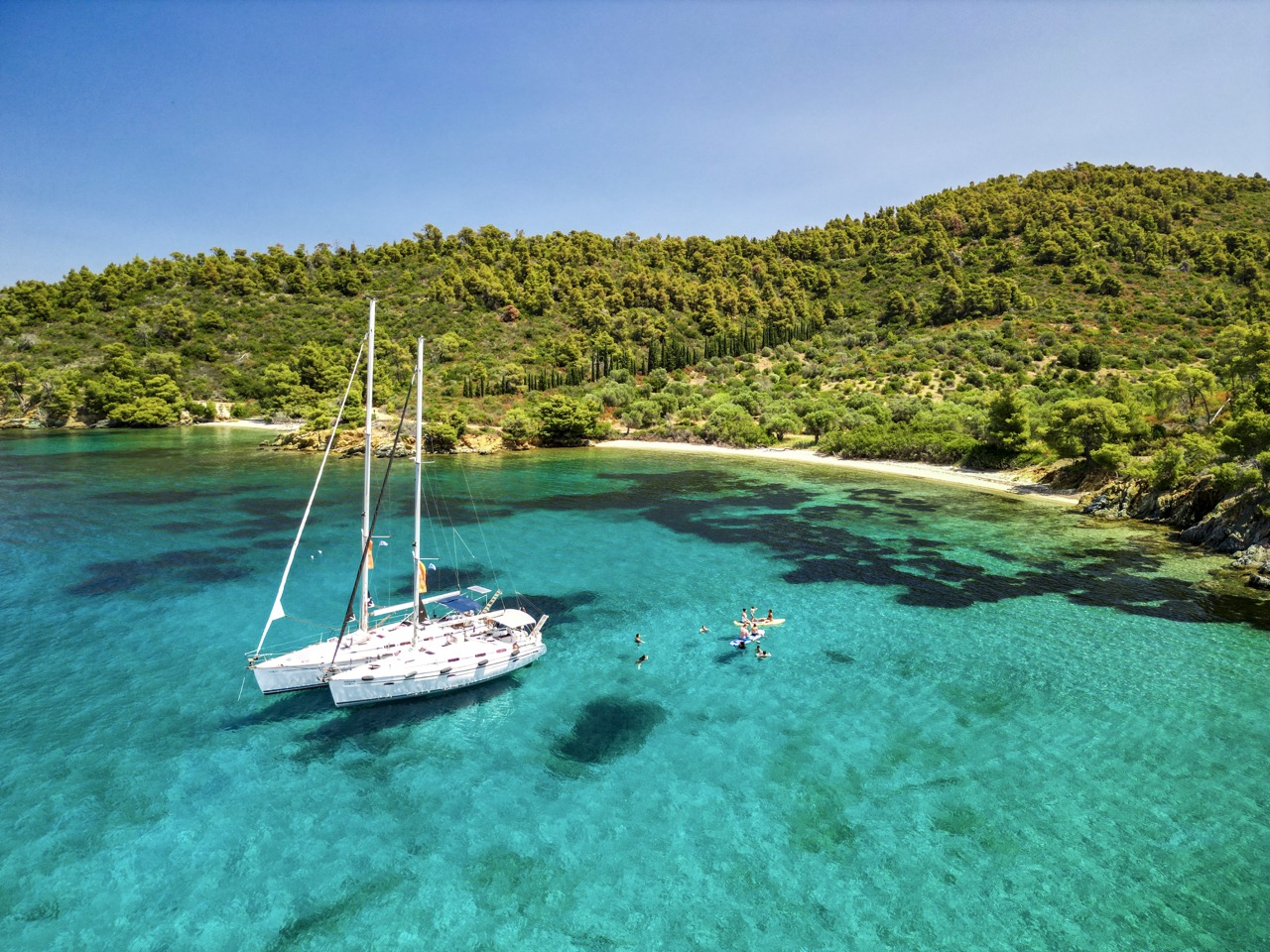
The western shore of Sithonia Halkidiki is where most of the peninsula’s life happens. Nikiti at the northern entrance is a lively town with a good waterfront and a well-known beach. Further south, Neos Marmaras is the largest settlement on Sithonia – a busy harbour town with excellent restaurants and the vast Porto Carras Grand Resort just around the headland, one of the largest private wine estates in Greece. Porto Koufo, near the southern tip, is one of the most dramatic natural harbours in the Mediterranean. And the wide sandy bay of Toroni, somewhere between the two, is one of those places that stops you mid-sentence when you first see it.
The eastern side of Sithonia is less visited and more dramatic. This is where you find Armenistis, with its famous camping area and pine trees growing literally to the water’s edge, and Kavourotrypes – the extraordinary rock formations and impossible colours that have made Sithonia famous across Greece. Many of the best spots on this coast have no road access at all. They reward those who arrive by sea.
Sithonia has beautiful beaches that anyone can find on a map. But it also has places that don’t appear on any tourist guide – small coves, rocky anchorages, and stretches of pine-backed shore that are only accessible by boat.
Below the Porto Carras estate lies a large private stretch of coastline with a series of natural coves small, tucked-away anchorages with extraordinarily turquoise water that are only reachable by sea. The pine forest here doesn’t stop at the beach. The trees grow straight from the rocks at the shoreline, their roots in the water. When you swim in these places, the scent of pine hangs over the surface of the sea. It is one of those sensory experiences that is almost impossible to describe and completely impossible to forget.
The bay of Toroni is one of the great sailing views of the northern Aegean. A wide, gently curving arc of sandy beach backed by pine forest, with the ruins of an ancient acropolis on the headland above. The water shifts from pale turquoise in the shallows to deep cobalt further out. Approached from the sea on a clear morning, it is the kind of scene that makes people stop talking on deck.
Porto Koufo is one of the deepest natural harbours in the Mediterranean – so sheltered and so enclosed that it is completely invisible from the open sea until you are almost inside it. During the Second World War, this extraordinary geography made it a base for submarines: a natural hiding place that the sea itself had designed. Today it is peaceful, dramatic, and unlike anywhere else in Halkidiki. The entrance by sea, with the cliffs rising on both sides, is something that no photograph quite captures.
Just below Porto Koufo lies Cape Marathia a near-vertical cliff face with no road, no path, and no easy way down. The only access is by specialised off-road vehicle on a rough track, or by sea. From the water, the cape is dramatic: sheer rock dropping straight into deep, clear water, with complete solitude on the other side. It is the kind of place that reminds you why some people choose to travel by boat.
A sailing cruise along the Sithonian coast covers ground that most visitors to Halkidiki never see. The hidden coves of the Toronaios Gulf, the pine-scented anchorages of Porto Carras, the approach to Porto Koufo through its narrow entrance these are experiences that belong entirely to the water.
If you’ve driven through Sithonia and thought you knew it you’ve seen perhaps half of it.
For a deeper look at what makes Halkidiki’s coastline so special, read our guide on the hidden gems of Halkidiki.