
What Is the Blue Lagoon Vourvourou and Why It Draws Sailors
The Blue Lagoon at Vourvourou is one of those places that earns its name. The water in the sheltered bay between the mainland shore and the Diaporos island cluster turns a colour that genuinely looks improbable from a boat: pale turquoise over sand, deepening to clear green further out. It sits on the middle peninsula of Halkidiki, in an area most people call Sithonia, and it has become the single most talked-about swimming destination in the region.
What makes it work as a sailing destination is the geography. Diaporos is not one island but a loose group of small islets and sandbars. They create a natural enclosure that keeps the water calm even when there is wind outside. Sailors can anchor close in, swim straight off the boat, and still have proper breeze for the passage there and back. That combination is rare, and it is why the Blue Lagoon Vourvourou keeps appearing in reviews from people who have sailed all over the Aegean.
The Vourvourou area itself is a long, narrow inlet. The village is quiet compared to the larger resorts further along the coast, which suits people who are here for the water rather than a beach club. Most of the boat traffic in summer comes specifically for the lagoon, which tells you something about how well the place delivers on its reputation.
The Diaporos Island Cluster: Best Swimming Spots to Know
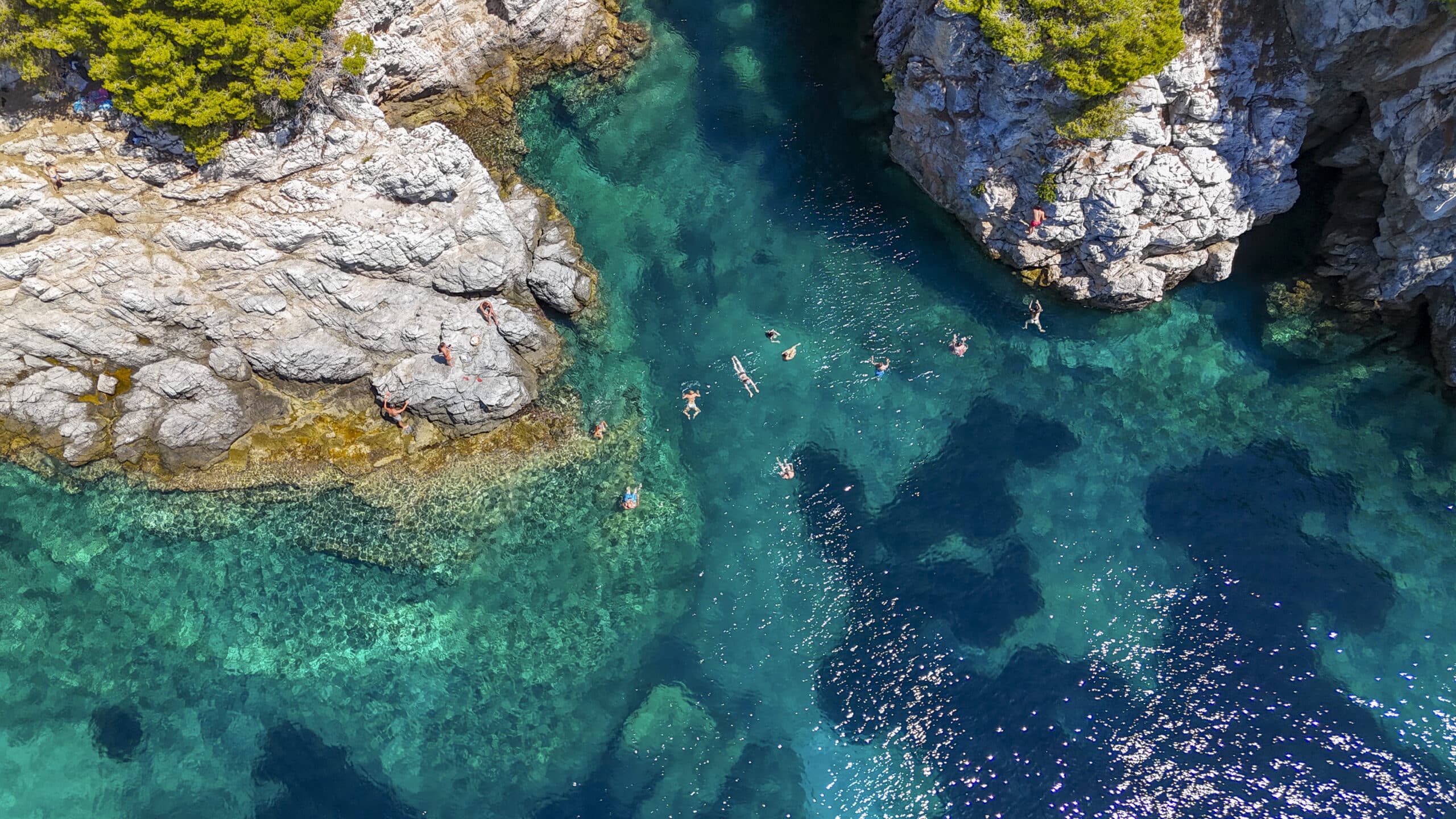
Diaporos island Halkidiki is the largest piece of land in the cluster, but the most photographed spots are the sandbars and shallow channels between the smaller islets. At low water some of these sandbars sit just above the surface, and you can walk between them. The lagoon itself forms in the channel closest to the village, where the seabed is pale sand and the water stays shallow enough to show the colour from some distance away.
There are several distinct swimming spots worth knowing about:
- The main lagoon channel – the shallow, sandy strip between Diaporos and the mainland shore. This is the classic Blue Lagoon photo location and gets busy from late morning in July and August.
- The eastern beaches of Diaporos – more exposed to open water, less crowded, with a firmer sandy bottom that makes for good swimming when the wind is light.
- The north-facing coves – smaller, partially shaded by scrub pine in the morning, and often quieter than the main channel even in peak season.
- The outer sandbars – accessible by dinghy or a short swim, these shift a little from year to year depending on winter storms, so what you find on the day is always slightly different.
Arriving by sailing yacht or catamaran gives you the practical advantage of choosing your spot rather than being fixed to a beach. You can read the anchorage, see where the crowds are, and move if you want quieter water. That flexibility matters here more than at a lot of other destinations because the lagoon area is compact and some corners fill up fast.
Snorkeling and Underwater Life Around the Lagoon
Snorkeling in Halkidiki is at its best where the seabed changes character, and the edges of the Diaporos cluster give you exactly that. The sandy lagoon floor itself is not the most interesting underwater – it is beautiful from above but relatively sparse below. The places worth putting your mask on are the rocky points at either end of the main channel and the kelp-fringed shallows on the outer sides of the islets.
Around those rocky edges you find the usual eastern Mediterranean mix: sea bream, wrasse, mullet, the occasional octopus tucked into a crevice. Posidonia seagrass meadows appear at slightly deeper water off the exposed faces of the islets, and these are worth seeing because they are an indicator of genuinely clean water. The clarity around Vourvourou is consistently good, which makes even a basic snorkel worthwhile.
You do not need specialist equipment. A standard mask and fins are enough. Visibility on a calm day is good enough to see the bottom in most of the swimming areas. If you bring an underwater camera, the light is best in the morning when the sun angle is lower and the surface chop minimal.
Sailing vs Catamaran: Which Boat Suits a Vourvourou Day Trip
We run one sailing yacht and one catamaran, and people ask me regularly which one is better for a day trip to the Blue Lagoon area. The honest answer depends on what matters most to your group.
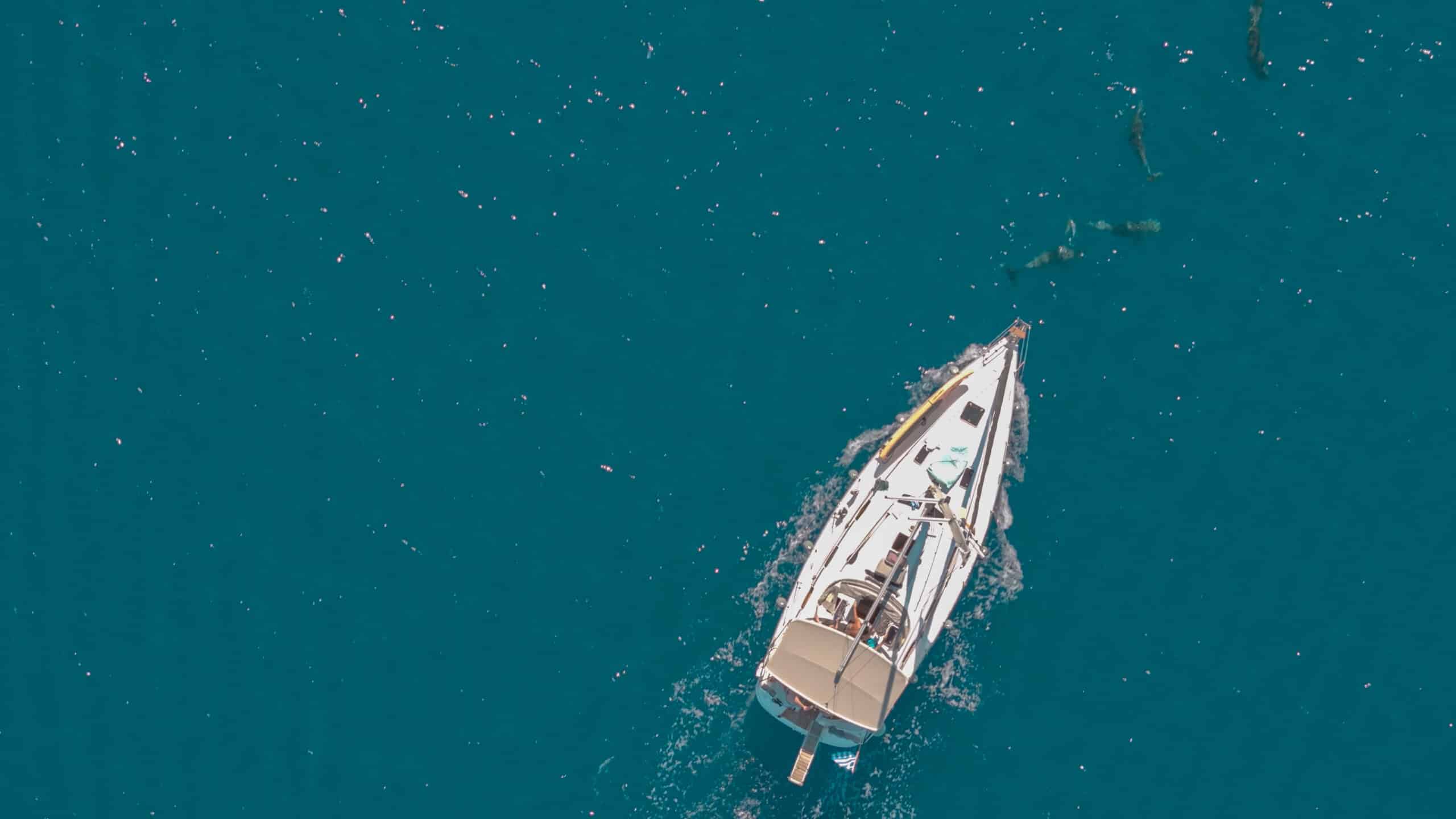
The sailing yacht is the right choice if you want the actual sailing experience to be part of the day. The passage along the Sithonia coast can be excellent sailing, especially with a northerly wind in the afternoon. The boat heels, you trim the sails, and the journey becomes its own thing rather than just transport to the swimming spot. It is a more physical experience and a more intimate one.
The catamaran suits people who want stability and deck space above almost everything else. The wide platform makes it easier for children, easier to move around, and easier to get in and out of the water. There is more room to spread out, which matters on a full day. The catamaran also sits more level at anchor, so if some of your group get uncomfortable on a heeling hull, they will be more relaxed on the cat.
For a Vourvourou sailing day trip in particular, either boat works well in the conditions typical of summer. The key question is whether the sail itself is part of your holiday or whether you mainly want to arrive, swim, and eat somewhere beautiful. Check our Full Day Catamaran Cruise and Full Day Sailing Cruise pages for current availability and what each trip involves.
What to Expect on a Sailing Day Trip from Sithonia
A full day trip from Sithonia runs around seven hours on the water. That is enough time to sail to the Blue Lagoon area, spend a proper stretch swimming and snorkeling, eat something, and still have wind in your face on the return leg. A half day at around five hours is tighter but still worthwhile if your schedule does not allow a full day – see the Half Day Catamaran Cruise for that option.
What actually happens on the day varies with the conditions, the group, and how long people want to stay in the water at each stop. I do not run trips on a fixed itinerary with a stopwatch. If the anchorage is perfect and everyone wants another half hour in the lagoon, we take it. That is one of the genuine differences between a private sailing trip and a mass-market boat tour.
Things to plan for practically: bring more sun protection than you think you need. The reflection off the water doubles your UV exposure, and the breeze on a moving boat makes you underestimate how much sun you are getting. Bring a change of clothes. Bring water shoes if the rocky points interest you for snorkeling. For specific details on what is provided and current pricing for any of our cruises, the booking pages have up-to-date information.
September in Vourvourou: Why Late Summer Is the Sweet Spot
July and August in the Blue Lagoon are busy. The main lagoon channel can have a lot of boats anchored close together by midday, and the sandbars see steady foot traffic. That is the reality of a place that has become genuinely popular, and the reviews for Vourvourou consistently mention the crowds as the one downside of peak season.
September changes the equation considerably. The water temperature is at its warmest of the year, having absorbed heat through the whole summer. The light is slightly softer. The crowds drop off sharply after the first week of September as school terms start across Europe, and the anchorages open up. Wind patterns are often more consistent in September than in high summer, which suits sailing.
October is still viable for swimming in Halkidiki, though the Blue Lagoon’s appeal depends on that characteristic turquoise colour, which requires sun angle and calm water working together. September reliably delivers both. If you are flexible on timing and the main goal is the Blue Lagoon experience rather than a family holiday during school break, late summer is when I would go.
How to Reach the Blue Lagoon Without Your Own Boat
The Blue Lagoon Vourvourou is not accessible by road. The islets and sandbars of the Diaporos cluster sit offshore, and the lagoon itself only makes sense from the water. Your options are to rent a small motorboat independently from one of the local operators near Vourvourou village, join a group boat tour, or book a private sailing or catamaran cruise.
Renting a small boat yourself is straightforward if you are comfortable navigating a short stretch of coastal water and reading an anchorage. The Blue Lagoon Vourvourou boat tour and rental market in the area is active, with several operators offering hourly or daily rentals. Reviews generally suggest this works well for people who know what they are doing on the water and want maximum independence.
A private sailing or catamaran cruise covers more of the coastline, adds the sailing element, and suits people who want a skipper handling the navigation and anchoring while they concentrate on enjoying the day. For current information on our cruises – including the Full Day Sailing Cruise and Full Day Catamaran Cruise – check the booking pages rather than asking me for prices here, because those change with season and availability.
Practical Tips Before You Go
- Go early or late in peak season. The main lagoon channel is quietest before 10am and after 4pm in July and August. If your boat can get there at either end of the day, the experience is significantly better.
- The sandbar shifts. Do not plan around a specific map you found online from a few years ago. The shallow channels and exposed sandbars change after winter storms. What you find on the day is part of the discovery.
- Anchor position matters. The blue colour is most intense over the pale sandy floor in the main channel. Boats anchored over the darker seagrass patches see less of the effect. A skipper who knows the anchorage will make a difference here.
- Bring cash to the village. Vourvourou is a small settlement and not every taverna or kiosk has reliable card payment. This is true of many quieter spots in Halkidiki.
- Check conditions the morning you go. The lagoon is sheltered but the passage to it is not always flat. Meltemi winds in August can make the open coast lively. Your skipper or boat operator will know whether conditions are suitable.
Frequently Asked Questions
How do I get to Blue Lagoon Halkidiki?
You need a boat. The Blue Lagoon sits in the Diaporos island cluster off Vourvourou on the Sithonia peninsula, and the sandbar and lagoon area is only reachable by water. Options include renting a small motorboat locally near Vourvourou, joining a group boat tour, or booking a private sailing or catamaran day trip. There is no road or footpath access to the main lagoon itself.
Is the Blue Lagoon in Paros worth it?
Paros has its own lagoon area, typically referring to the bay near Kolimbithres or the Naousa area, and it draws strong reviews. The Vourvourou Blue Lagoon in Halkidiki is a different place entirely and compares well – the water clarity and colour are genuinely exceptional, and the Diaporos island cluster gives you several distinct swimming spots rather than a single beach. Whether Paros or Halkidiki suits you better depends mostly on where you are based.
Is Blue Lagoon Cyprus worth it?
The Blue Lagoon in Cyprus, near the Akamas Peninsula, is a well-regarded destination accessible by boat trip from Latchi. It operates quite differently from the Vourvourou lagoon – it is a sea cave and open cove rather than a sheltered sandbar lagoon. Both are worth visiting on their respective islands. If you are planning a trip to Halkidiki, the Vourvourou lagoon is a comparable quality experience without the need to travel to Cyprus.
Can you swim in Blue Lagoon Cyprus?
Yes, the Cyprus Blue Lagoon is an open swimming area with no facilities on shore – you swim from your boat or from the rocks. It is a different style of swimming spot from the Vourvourou lagoon in Halkidiki, which has the characteristic shallow sandy floor that produces the turquoise colour. Both are swimming destinations rather than beach clubs; neither has lifeguards on duty.


The summer slots fill fast, so the sooner you reach out, the better your options.
🎈 Special requests?
Decorations, catering, surprise arrangements, just ask.
Contact Us →